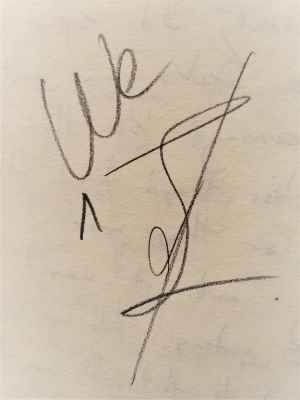
Fiction needs a makeover. It’s worn minor variations of the same tired face for the last few centuries, at least: man against nature, man against man, man against self. That’s a lot of man. And a lot of against. It’s a lot of dualities.
Dichotomies have always made me uncomfortable: how on earth can multiversality be neatly divided into two sets of anything – nature/culture, subject/object, protagonist/antagonist? Scales make more sense, and webs, networks (Bruno Latour), entanglements (Jane Bennett), rhizomes (Deleuze and Guattari), meshes (Timothy Morton). They make even more sense when you stop to think about ecosystems and the complexity of forces flowing in and out. And it comes home when you think about your own ecosystem, your body, which is comprised of about 57% nonhuman cells: bacteria, fungi, and protists, not to mention the odd gene you’ve picked up by horizontal transfer from your spouse, kids, and coworkers. And all of these are essential to our functioning. You are plural, not singular, you are always already multi, a “we.”
How then do we justify continuing to authentically tell stories as and about “I’s”? It’s a convenient placeholder, to be sure, to designate a roughly contained flesh bag and a roughly continuous consciousness, but how do we talk about our own equally real and important porousness, the gamma rays passing through us, the plants, animals, minerals we consume that build our cells, the pheromones we exude, our waste breath and shit, let alone all of the porous selves that have nothing to do with us?
My proposal is this: we need more we-stories, we need more with-stories, we need more not-us stories. As multicultural and postcolonial writers gain voice, our fiction toolbox starts to bulge with all sorts of potential, from polyvocal narration, to challenging realism, to non-linear plot shapes.
Fiction workshop wisdom is that plot is conflict, and without plot you have no story. What would story be without conflict? Can you tell stories of cooperation? Would anyone care to read them? I don’t know; let’s find out. More recently, workshops emphasize simply a need for change to occur. This I can get behind; change is a constant. Everything changes, everything is therefore storied and story-able.
But there are a lot of stories we don’t tell. Namely, the ones we don’t star in. We have a relentless need to photobomb every scene. But non-human entities, from hills to stars to starfish to tomatoes have stories – they act and are acted on, they change and move. Their stories are vibrant and tantalizing. Partly, we suffer from grotesquely limited senses and a lack of imagination to reach beyond our own finitude. The change that affects hills and stars happens on scales of space and time we struggle to apprehend, but change they do, story they do, we just need to learn to read them and translate. This is an area where science works as a nice goad to imagination, making sensory expansion possible.
Story is the place where we push into new ways of understanding, where we can safely play with the uncomfortable. I enjoy a good conflict, of course I do, and I have the same drive to figure out what the hell I’m doing here, but we need to keep expanding our vocabulary; we need stories that tell more of the story of what it is to be, not just to be human.
 Life in the Multiverse